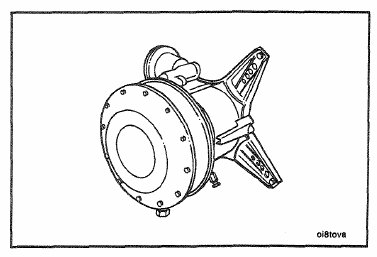
Use engine lifting fixture, Part No. ST-125, to install the engine to the test stand. Align and connect the dynamometer. Refer to the manufacturer’s instructions for aligning and testing the engine.
NOTE: Make sure the dynamometer capacity is sufficient to permit testing at 100 percent of the engine rated horsepower.
If the capacity is not enough, the testing procedure must be modified to the restrictions of the dynamometer.

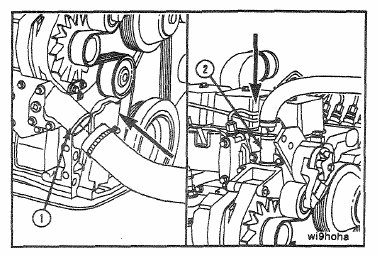
Connect the coolant supply to the water inlet connection (1).
Connect the coolant return to the water outlet connection (2).
Install the drain plugs, close all the water drain cocks, and
make sure all the clamps and fittings are tight.
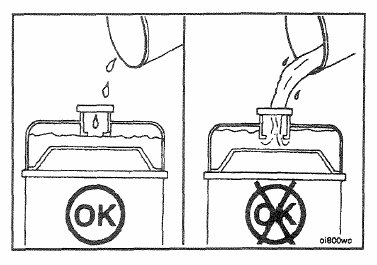
Fill the cooling system with coolant to the bottom of the fill neck in the radiator fill (or expansion) tank.
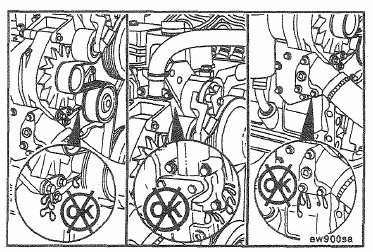
Inspect the engine for coolant leaks at connections, fittings, plates, and plugs. Repair as necessary.
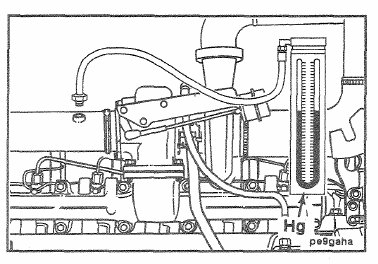
Connect a water manometer to the turbocharger air inlet pipe to test air restriction.
NOTE: The manometer connection must be installed at a 90 degree angle to the air flow in a straight section of pipe, one pipe diameter before the turbocharger.
NOTE: A vacuum gauge can be used in place of the water manometer.
Minimum Gauge Capacity: 760 mm H20 [30 in. H20]

Connect a mercury manometer to a straight section of the exhaust piping near the turbocharger outlet to check exhaust restriction.
NOTE: A pressure gauge can be used in place of the mercury manometer.
NOTE: For automotive applications a taped hole is provided on the inlet side of the catalyst for checking exhaust restrictions.
Minimum Gauge Capacity: 254 mm Hg. [10 in. Hg.]
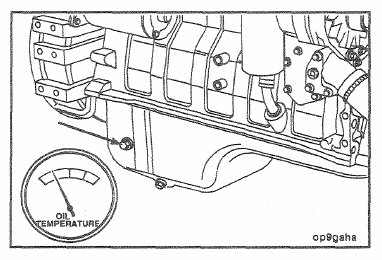
Attach the lubricating oil temperature sensor in the location shown.
Minimum Gauge Capacity: 150° C [300° F]
Attach the lubricating oil pressure sensor to the main oil rifle drilling in the cylinder block.
Minimum Gauge Capacity: 1034 kPa [150 psi]
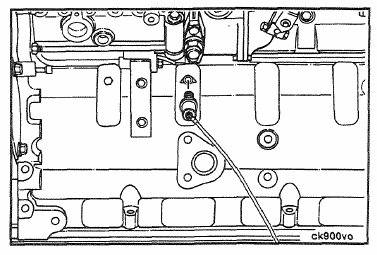
Caution: The lubricating oil system must be primed before operating the engine after if has been rebuilt to avoid
internal damage.
To prime the system using external pressure, connect the supply to a tapped hole in the main lubricating oil rifle.
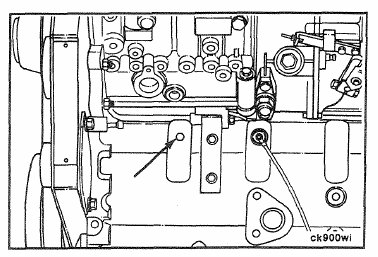
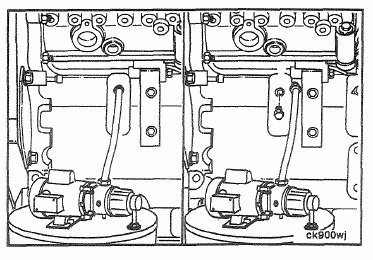
Use a pump capable of supplying 210 kPa [30 psi] continuous pressure. Connect the pump to the port on the
main lubricating oil rifle as shown.
Use clean 15W-40 lubricating oil to prime the system until the oil pressure registers on the gauge.
Remove the lubricating oil supply tube, and install the plug.

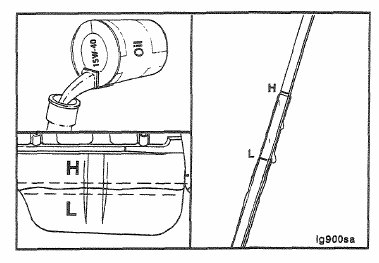
If an external pressure pump is not available, prime the lubricating system according to the following procedure.
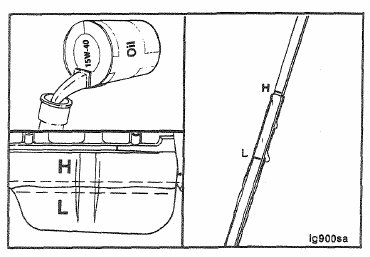
Fill the engine with lubricating oil to the high level mark on the dipstick.

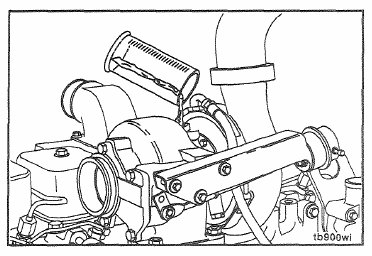
Disconnect the turbocharger lubricating oil supply tube.
Pour 50 cc to 60 cc [2.0 fl. oz. to 3.0 fl. oz.j of clean 15W-40 lubricating oil into the turbocharger lubricating oil supply hole.
Connect the lubricating oil supply tube to the turbocharger.
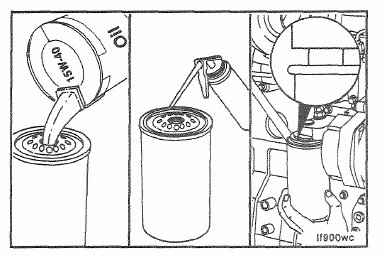
Caution: Mechanical over-tightening can distort the threads or damage the filter element seal.
Fill the lubricating oil filters with clean 15W-40 lubricating oil.
Screw the filters onto the filter head fitting until the gasket contacts the filter head surface.
Tighten the filter as specified by the manufacturer.
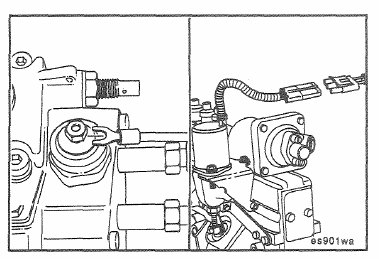
To make sure the lubricating oil pump is providing adequate lubricating oil to the engine, first disconnect any
wires leading to the fuel injection pump solenoid.
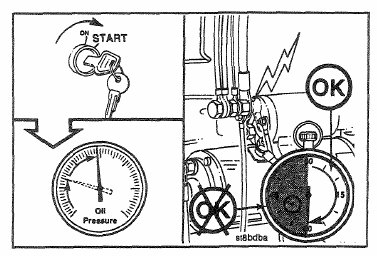
Caution; Do not crank the starting motor for periods longer than 30 seconds. Excessive heat w ill damage the
starting motor.
Crank the engine until the lubricating oil pressure gauge indicates system pressure.
NOTE: Allow 2 minutes between the 30-second cranking periods so the starting motor can cool.
NOTE: If pressure is not indicated, find and correct the problem before continuing.
Allow the lubricating oil to drain into the lubricating oil pan, and measure the lubricating oil level with the dipstick.
Add lubricating oil as necessary to bring the level to the high level mark.
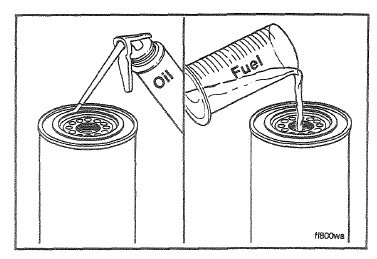
Lubricate the gasket on the fuel filter with clean 15W-40 lubricating oil.
Fill the fuel filter with clean fuel.
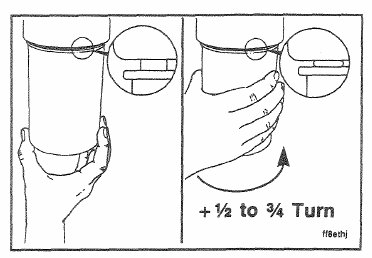
Screw the fuel filter onto the filter head until the gasket contacts the filter head surface.
Tighten the filter an additional 1/2 to 3/4 turn.
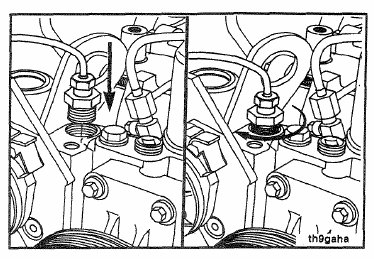
Make sure the voltage supply matches that of the fuel pump solenoid before connecting the electrical wires to it.
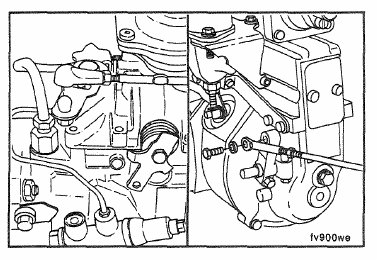
Attach the throttle control rod onto the fuel injection pump throttle lever.
If the air crossover tube does not have a pipe plug and tapped hole, perform the following procedure.
Remove the air crossover tube from the engine.
Drill and tap a 1/8 inch pipe thread hole in the crossover tube in the location shown.
Clean all metal shavings from the air crossover tube.
Install the crossover tube.

To determine the amount of turbocharger boost, remove the pipe plug in the air crossover tube; and install the
intake manifold pressure sensor or pressure gauge, Part No. ST-1273.
Minimum Gauge Capacity: 1905 mm Hg [75 in. Hg]

For accurate engine crankcase blowby measurement, insert a blowby checking tool in the crankcase breathervent.
Connect a water manometer to the blowby tool. A pressure gauge can be used in place of the manometer.
Minimum Gauge Capacity: 1270 mm H20 [50 in. H20]
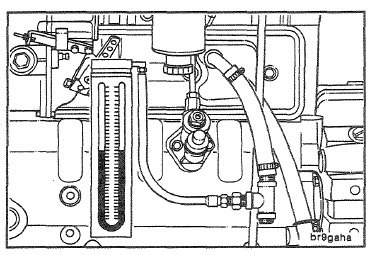
To measure fuel filter restriction, connect vacuum gauge,
Part No. ST-434, to the injection pump inlet line.
Minimum Gauge Capacity: 760 mm Hg [30 in. Hg]
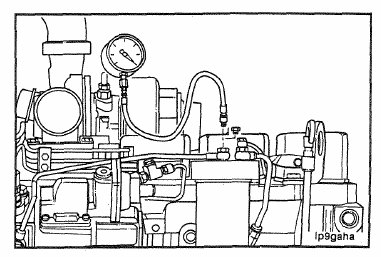
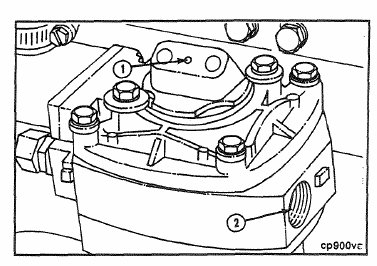
To be able to unload the compressor, connect a source of compressed air to the unloader (1). This air line must
contain a valve between the source and the unloader.
NOTE: All air compressors manufactured by Cummins Engine Company, Inc. must be loaded during engine run-in. All air compressors must be unloaded during the engine performance check.
NOTE: The compressed air load in the accompanying illustration must be attached to the air compressor outlet (2).
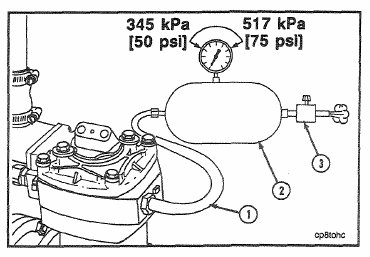
To provide a load on the air compressor, connect an air tank (2) to the compressor outlet, use steel tubing or a
high temperature hose (1). Install an air regulator (3) that can maintain tank air pressure of 345 kPa to 517 kPa [50 psi to 75 psi] at both the minimum and the maximum engine RPM.
Hose Temperature (Minimum): 260° C [500° F]
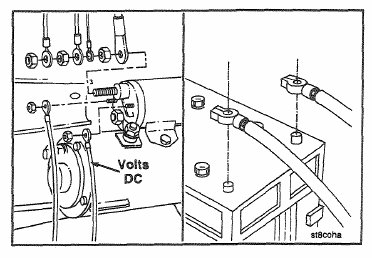
Inspect the voltage rating on the starting motor before installing the electrical wiring.
Attach electrical wires to the starting motor and the batteries, if used.
NOTE: If another method of starting the engine is used, follow the manufacturer’s instructions to make the necessary connections.