In the M57, the pressure control valve is located at the high pressure pump and, in the M67, in the distributor block (see Fig. high pressure accumulator).
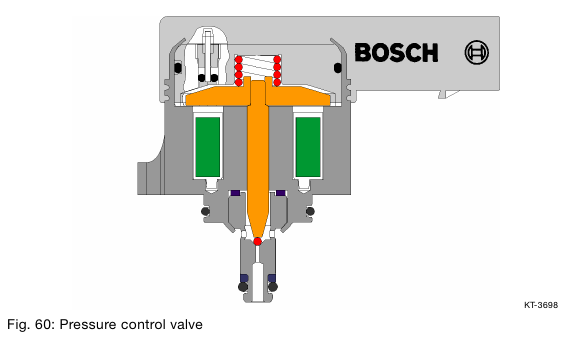
Task
The pressure control valve has the task of setting and maintaining the rail pressure according to the load status of the
engine.
• If the rail pressure is too high, the pressure control valve opens, which enables some of the fuel to pass from the rail to the fuel tank via a collector line.
• If the rail pressure is too low, the pressure control valve closes and seals the high pressure side from the low pressure side.
Structure
The DDE control unit controls an armature via a coil. The armature presses a ball into the seal, which seals the high pressure side from the low pressure side. When the system is not activated, the ball is controlled by a spring. The entire armature is coated with fuel from the flanged-on component for lubrication and heat dissipation.
Function
The pressure control valve has two control circuits:
• One electrical control circuit for setting a variable pressure value in the rail and
• One mechanical control circuit for equalising high frequency pressure fluctuations.
Since the time factor plays an important role in controlling the pressure, the electric control circuit compensates for slow pressure fluctuations and changes and the mechanical control circuit compensates for the quick ones.
Non-activated pressure control valve
The high pressure present in the rail or in the high pressure pump output is exerted on the high pressure intake of the pressure control valve. Since the deenergized electric magnet is not in effect, the force of the high pressure is greater than the force of the spring, which opens the pressure control valve. The spring’s design creates a pressure of max. 100 bar.
Pressure control valve activated
If the pressure in the high pressure circuit is to be raised, the magnetic force and spring force must be increased. The pressure control valve is activated and closed until there is a balance between the high pressure force on the one side and the magnetic and spring forces on the other. The magnetic force exerted by the electromagnet is in direct proportion to the activation current. Variation in the activation current is achieved by PWM. The PWM frequency is 1 kHz i.e. high enough to prevent disturbance from armature movements and/or fluctuation in pressure.
